Society of St. Francis Xavier, Pilar’s Fr. Conceicao Rodrigues College of Engineering
Society of St. Francis Xavier, Pilar’s

Society of St. Francis Xavier, Pilar’s

Society of St. Francis Xavier, Pilar’s
Fr. Conceicao Rodrigues College of Engineering
An Autonomous Institute Affiliated to University of Mumbai | NAAC "A" Grade Accredited
Fr. Agnel Ashram, Bandstand, Bandra (W), Mumbai: 400050
Fr. Conceicao Rodrigues College of Engineering
| An Autonomous Institute Affiliated to University of Mumbai | NAAC "A" Grade Accredited |
NAAC
Where hardware and software unite to engineer the future of smart technology.
Autonomous Curriculum
Certificate of Accreditation
AQAR 2023-24
NAAC 2018-19
NAAC 2019-20
NAAC 2020-21
NAAC Reassessment
Institutional Best Practices
Best Practice 1: Open Source Culture and In-house Software Development
1. Title of the Practice
Open Source Culture and In-house Software Development
2. Objectives of the Practice
Proprietary commercial software involves significant cost, annual expenses, restrictions on usages and licensing terms. Sometimes learning outcomes are limited or administrative work suffer due to restricted modifications to be done in commercial software as per the need. College identified that solution is creating an ecosystem for promoting use of open source tools and also in-house development of software’s for academics and administrative purposes. Even though open source tool provides cost saving but it is a matter of liberty. The freedom to run the program, the freedom to study how the program works, and adapt it to your needs.
3. The Context
One of the most important benefit of using open source tools and in-house development of tools is that one can make more transparent decision-making processes creating more sense of ownership in the stakeholders. Hence processes need to be clearly defined before development and subsequent deployment of the software. Feedback from every stakeholder is required to be taken often.
Special training programs are required to be organized before using open source software’s in the laboratory e.g. training on Scilab need to be given before using Scilab in mathematics course.
Open source culture is geared toward transparency, openness, and encouraging participation from diverse contributors. Many organizations are currently transforming their infrastructure by moving into open cloud platforms such as OpenStack. In many cases it is because of good ROI. Hence culture of collaboration and team work is essential for use and development of institute level software modules.
4. The Practice
Fr. CRCE is having an infrastructure of 600+ computers. Most of the computers have open source Linux operating system installed on them. College encourage students to use open source software and tools for their laboratory work and projects.
Open source software’s such as Libreoffice, OpenCV, PyTorch, OpenNN, TensorFlow, LaTeX, Octave, Scilab, GCC compiler, JDK, Eclipse, Umbrello, GNU plot, python compiler, packet tracer, NS2, Apache Hadoop ecosystem etc. are available to perform laboratory experiments. College also has a cloud set-up on the Linux operating system. The list of open source software on campus is still growing. Faculty are trained on using Latex for writing and publishing research papers. While developing projects as academic requirement or to take part in project competitions, such as e-yantra (IIT, Bombay) project groups are mentored to use open source Technologies.
Open source technologies allows the developers to modify the code as per the need without any restrictions. Open source technologies are also OS platform independent. Software’s could be tailor made as per the necessity of institution or department. Open source has a great chance of success that can deliver a great value. Open source technologies are reliable and virus free. Hence there are many applications which institution require are developed in-house using open source tools. Following are the examples of applications developed:
- Application for Admission (Application, merit-list generation etc.)
- Application for Biometric marking of official timings
- Application for Leave Application
- Application for Service Records
- Application for Student Attendance marking
- Application for Payment of Fees
- Application for Examination e.g. Marksheet Printing
- Application for maintenance of stores
- Moodle Server for Teaching Learning
- Application for Allotment of Invigilation Slots
- Application for International Conference Review Process
Most of the commercial software’s available in the market for academic engagement and also governance in higher education institutions are developed by multinational companies. This culture of open source will create confidence among students to develop in-house applications.
Fr. CRCE has signed MoU with Linux Professional Institute (LPI) which is the global certification standard and career support organization for open source professionals. Students and faculty are given courseware for self-learning and then they can get themselves certified as Linux Professionals.
Entire life cycle of the project can be experienced in the closed loop environment in an institution during development and deployment of the project.
5. Evidence of Success
Software’s developed are used in day-to-day administration of the college. Open source tools are used in many laboratory courses. Apart from cost saving there are following benefits by use of this practice:
- Ability to innovate and customize the code based on institutions requirement.
- It encourages curiosity and develop culture of innovation
- Encourages developing new features, replacing or improving existing features
- Creates an environment of collaboration by attracting 3rd party developers/contributors
- In-house applications developed are found to be reliable, open and trustworthy
- Open source tools give freedom to learn without restrictions.
- High flexibility in modifying source code
- Create virus free environment eliminating the need to procure antivirus software’s
- Students are getting professional courseware along with access to code, APIs, documentation, experts advice because of MoU with LPI and opportunity for certification.
- It has eliminated the issue of systems getting affected by viruses
- All the applications developed are used by faculty and students for academic, research and administrative purposes.
- Sometimes the team struggle to track changes in the open source code. It also create security issues and other problems in system operation if not developed by considering such issues.
Open source technologies allows the developers to modify the code as per the need without any restrictions. Open source technologies are also OS platform independent. Software’s could be tailor made as per the necessity of institution or department. Open source has a great chance of success that can deliver a great value. Open source technologies are reliable and virus free. Hence there are many applications which institution require are developed in-house using open source tools. Following are the examples of applications developed:
- Application for Admission (Application, merit-list generation etc.)
- Application for Biometric marking of official timings
- Application for Leave Application
- Application for Service Records
- Application for Student Attendance marking
- Application for Payment of Fees
- Application for Examination e.g. Marksheet Printing
- Application for maintenance of stores
- Moodle Server for Teaching Learning
- Application for Allotment of Invigilation Slots
- Application for International Conference Review Process
Most of the commercial software’s available in the market for academic engagement and also governance in higher education institutions are developed by multinational companies. This culture of open source will create confidence among students to develop in-house applications.
Fr. CRCE has signed MoU with Linux Professional Institute (LPI) which is the global certification standard and career support organization for open source professionals. Students and faculty are given courseware for self-learning and then they can get themselves certified as Linux Professionals.
Entire life cycle of the project can be experienced in the closed loop environment in an institution during development and deployment of the project.
6. Problems Encountered and Resources Required
Regular Maintenance: Teams need to manage, maintain, upgrade and innovate the code throughout its life. Need to create a streamlined workflow that a new person could easily adopt to the tool in shortest time.
Governance: Requires thoroughly thought after strategy for deployment and maintenance of open-source software.
Absence of vendor support: You have to navigate on your own to solve the issues particularly during lab sessions or take help of open-source communities.
Interoperability of Tools Creating Silos: Some of these open-source tools are so independent of the other tools that they don’t provide uniformity and they don’t connect and integrate easily. This is problematic when data comes from multiple departments or sources. Integration of different applications is an issue.
Deployment to a larger scale: Many times software’s are developed as pilot projects without big challenges, but they encounter many issues when tried to deploy on larger scale.
7. Notes (Optional)
Any other institution can adopt this best practice provided they need to create culture of open source in an institute. Fr. CRCE celebrated Software Freedom Day on 17th Nov 2022 to create awareness among students and faculty about open source tool. Also workshop on Latex for all the faculty members and workshop on Scilab for all the newly admitted First Year students was organized.
Best Practice 2: Special Employability Training
1. Title of the Practice
Special Employability Training
2. Objectives of the Practice
- To augment the employability of the student and to equip him/her to place the right foot in the competitive environment with a felicitous approach.
- To train the students using a constructivist approach with diverse exposure to soft skills, communication skills, and intrapersonal skills, and prepare them to face interviews and get better placement.
- To involve the students in collaborative learning right from the first year to the final year for the pivotal understanding of career building, industrial jobs, and entrepreneurship.
3. The Context
Training & placement is imparted in the area of communication skill and aptitude persistently, to make the students employable. During the pandemic, students were encouraged to pursue internships and develop problem-solving and social learning theory skills. The Training & Placement Cell assists the students by conducting aptitude training and collecting feedback on pre-placement training. Moreover, Supporting Placement & Higher Education Requirements in Engineering (SPHERE) is an initiative that aims at providing a 360-degree support system in addressing students’ problems related to career counseling, higher education, placements, development of skill sets, academic guidance, etc. SPHERE organized an Industrial Visit for Interaction with Outside World & Bridging the Curriculum Gap to Kay Vybin Corporation Pune on 23rd April 2022.
The college’s Alumni Portal helps students network with alumni and find internships & study abroad placements.
The links for the aforementioned initiatives are as follows:
4. The Practice
Under the aegis of the institute and the academic syllabus, the Professional Communication and Ethics professors have crafted a practical approach to their teaching by considering the needs of the students required to suit the exigencies of the corporate world.
The program is tailored to enable the students to develop different soft skills. Special focus is on Communication Skills like Listening, Speaking, Reading, and Writing. Interpersonal skills including Leadership, Team Work, Time Management, Negotiation and Decision making, Emotional Intelligence, constructivist approach, collaborative learning approach, social learning theory-based approach, etc. are also taught to the students.
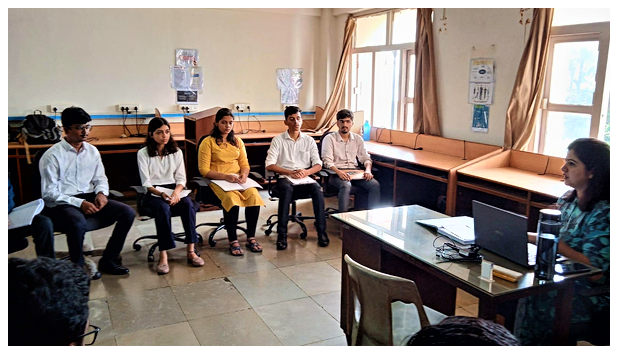
Activities like learning novel techniques of recording their presentations and merging them to forward them as records, watching motivating movies to analyze interpersonal skills, role plays, case studies, group discussions, mock interviews, etc. are also conducted to render hand-in-glove recruitment experience used by esteemed companies for recruitment procedures. The images below show an on-going session.
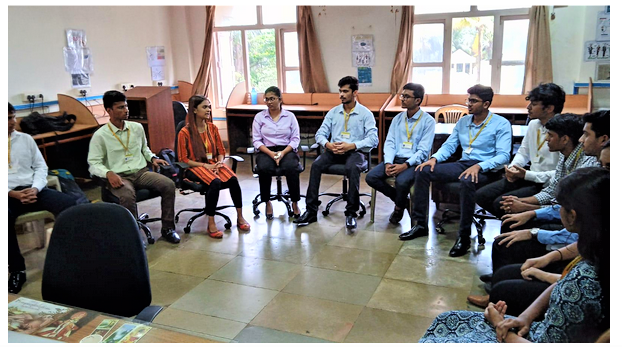
The institute integrates technology with possibilities to study beyond classrooms by engaging with students on numerous platforms. Events help students improve presentation, persuasive, and marketing abilities. The pandemic forced internet outreach to pupils.
The Placement cell pursues the target to build a strong brand presence among the industries by constantly interfacing and interacting with the stakeholders. The cell holds the responsibility of honing the students for their bright careers.
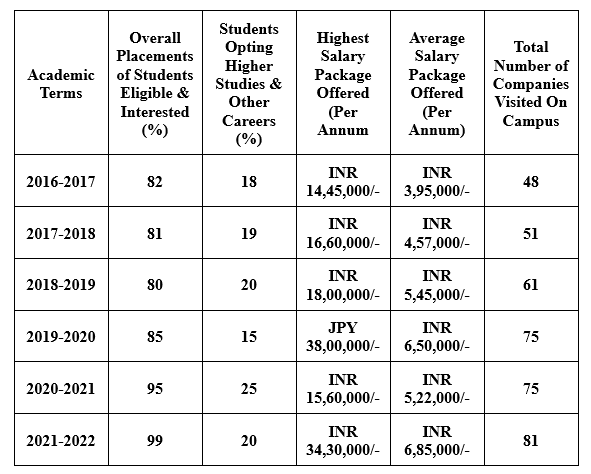
The Training & Placement Office (TPO) motivates and prepares students for interviews and prospective workplaces. Judicious and methodical preparation is initiated and sustained for this purpose. The TPO cell along with staff and student coordinators of each department takes pride in offering student services such as career planning, internships, and employment thereby preparing promising Engineers for a better future. As a result of the highly focused and continuous efforts of the TPO cell, every year almost all eligible students are placed. Many students also fetch multiple placement offers termed as Dream offers.
Internship Policy
Students apply for Internships at various organizations. Institute guides them in locating internship opportunities at reputed companies. Students go for internships at the end of the semester. The student count for Internships has increased over the years.
Training and placement cell helps the students in getting internships through their networking channels. Internship fairs organized by the cell regularly play a significant role in registering the concept of internships among students. In the B.E Production Engineering course, students opt for internships at various organizations for 6 months.
5. Evidence of Success
- Output assessment through placement records and student feedback.
- Improved communication skills and confidence among the students.
- Elevation in students’ performance in On Campus and Off Campus placement.
- Student performance in technical skills and HR interviews has been improved.
- Boost in students’ participation.
- Improvement in students’ entrepreneurship skills.
- Increased networking and association with industries.
- Multinational companies from abroad are also adding up to our list.
Placement Statistics Data
6. Problems Encountered and Resources Required
The academic year 2021-22, called for extra efforts from the teachers and students which resulted in a different teaching-learning experience in the partially online mode. Classes and placements were conducted in the comfort of their home. A lot of companies conducted Virtual Interviews. Stability in the internet connection turned out to be the prerequisite including a well-functioning laptop with a web camera, an audible mic, and microphone, a quiet corner in the house, for uninterrupted learning and delivery. Physical and psychological barriers created a lacuna considering motivation and clarity. The college has appointed a counsellor for the well-being of students. Students were also assigned mentors to be guided and supported in difficult times.
7. Notes (Optional)
Any other institution can adopt this best practice to train their students to become more employable. This practice has become successful because of the dynamic faculty members involved in the Training and Placement of the students. Therefore, to successfully implement this practice a good team is a must.
Institutional Distinctiveness
Fr. Conceicao Rodrigues College of Engineering (CRCE) believes in moulding engineers to build the nation. In this context, CRCE strives to promote the student’s holistic development by offering a platform for skill-based learning enhancement and by fostering hands-on learning.
Through different co-curricular activities and skill-based learning, the institute is committed to creating a holistic learning environment that extends beyond the prescribed course.
The following are the objectives and underlying principles:
- To establish an immersive learning environment in which students can learn through experience.
- To make students interested in the subject content and so increase retention.
- To provide learners with opportunities to participate actively in the learning process.
- To improve cognitive, creative, and critical thinking abilities.
- To instil in learners a sense of inquiry, teamwork, and a growth mentality.
Due to the quick development and active changes in the fields of science and technology, it is necessary to go beyond the traditional curriculum and investigate the most recent engineering achievements. Enrolling in numerous technical councils provides students with opportunities and broad exposure to the dynamic world of practice. Participating in various projects, activities, and events provides students with hands-on learning opportunities. Through additional design-based experiments, lab work, and projects, the existing gap in the traditional education system is filled. Students learn not only technical abilities, but also soft skills, such as working in teams, communicating with people, time management through meeting deadlines, critical thinking, creative thinking, and problem-solving, among others. Consequently, enhancing their uniqueness and character. Through such councils, students’ interest, passion, and curiosity for their subject are honed as they develop into active learners. Thereby, creating a holistic development of the skills and knowledge of students.
The College believes in conveying knowledge through a variety of methods. In addition to regular lectures and labs, students participate in several technical and non-technical committees/councils. They are encouraged to participate in various events such as Hackathon, Robotics, Project Competition, Automobile Design and Manufacturing, Workshops, Guest Lectures by Industry professionals and famous professors, Industrial Visits, etc.
The student chapters/councils from our college are listed below:
- American Society of Mechanical Engineers (ASME)
- Association of Computing Machinery (ACM CRCE)
- CodeLabs CRCE
- Computer Society of India (CSI)
- Entrepreneurship Cell (E-Cell)
- Institute of Electrical and Electronics Engineering (IEEE CRCE)
- Indian Institution Industrial Engineering (IIIE)
- Mozilla Campus Club CRCE
- National Service Scheme (NSS)
- Project Cell
- Rotaract Club
- Students Council
- Team Abadha
- Team Vaayushastra
- Team CRCE Formula Racing (Team CFR)
- Team Robocon
- Team Mavericks
- TEDxCRCE
- IEEE-WIE
Given below are some of the events which these chapters/councils have conducted to address the holistic development of the students.
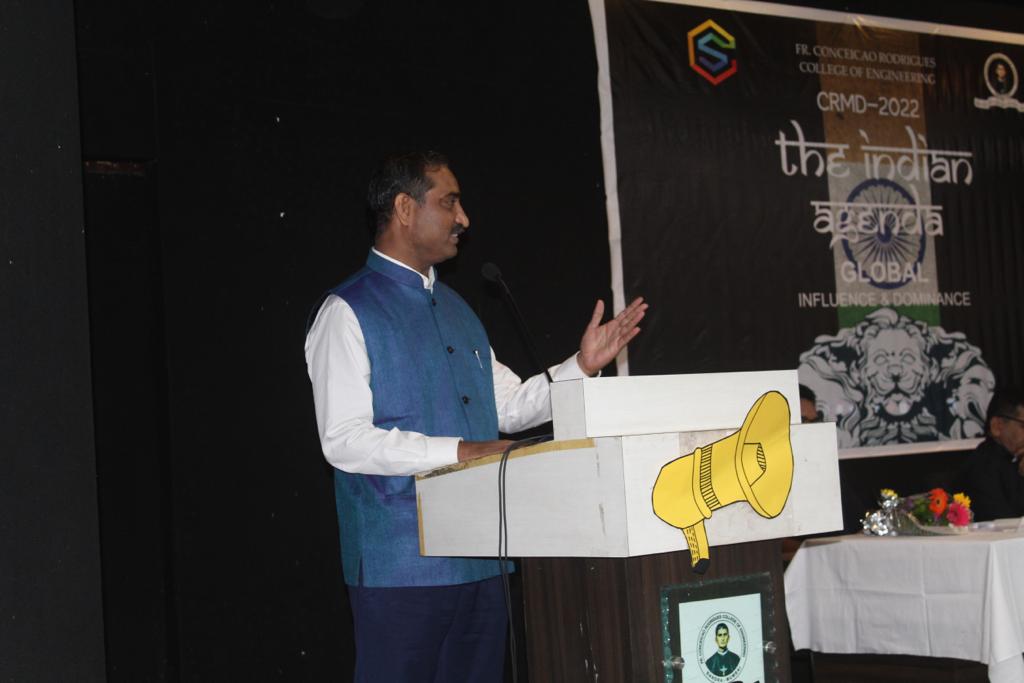
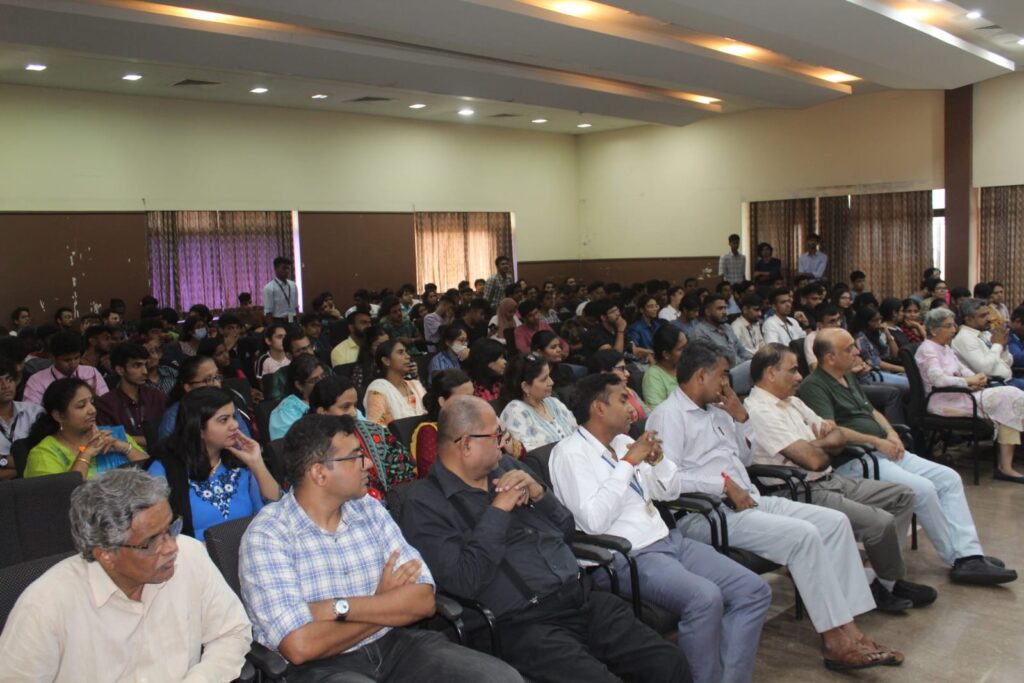
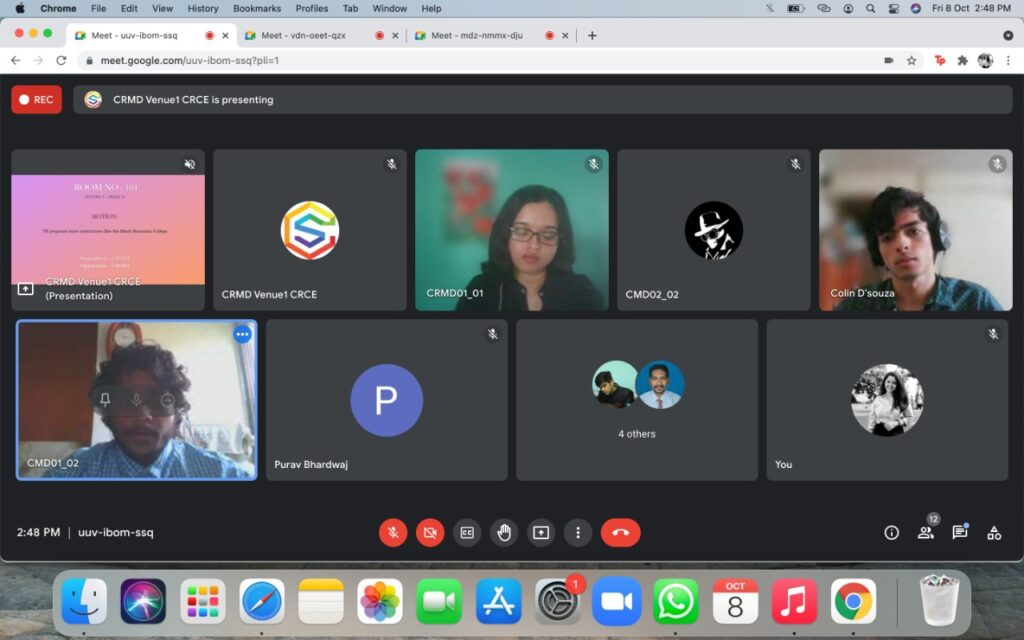
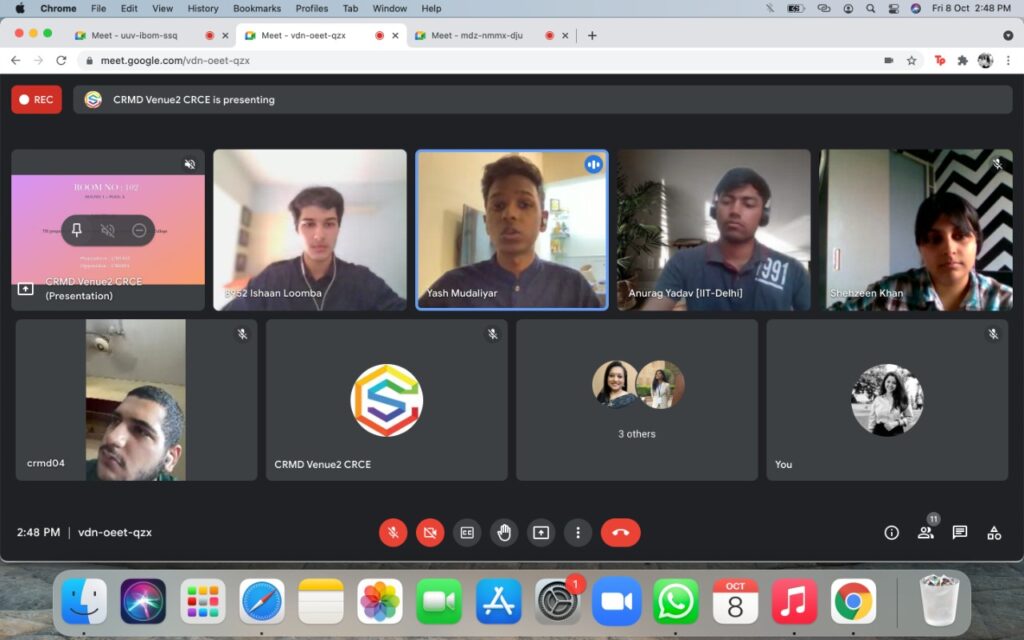
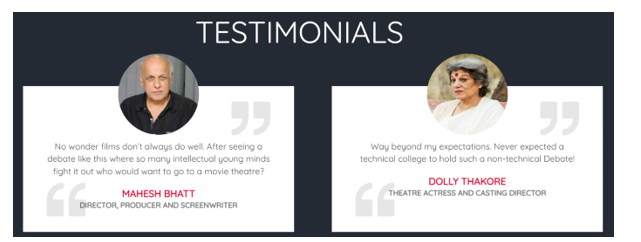
The Students’ Council of CRCE organizes a national-level debate competition known as Conceicao Rodrigues Memorial Debate (CRMD). This is CRCE’s flagship event organized since 1999. In the current academic year, CRMD was organized on the 7th and 8th October 2022. The theme was “The India Agenda – Global Influence and Dominance.” More than 30 short-listed institutions participated in the debate. The power of real debate is in the language and intellectual honesty of the debaters, alongside the engagement of spectators. The debates provided a forum for today’s youth to engage in various affairs experienced in daily life, CRMD was an indulgent treat for the debaters and the audience alike. Some photos of CRMD – 2022 are shown below:

CRMD – 2021 was organized from 8th to 10th October. The theme was “The Emanation of Unbecoming Comportment.” Some photos of CRMD – 2021 are shown below:
Testimonials from past chief guests.
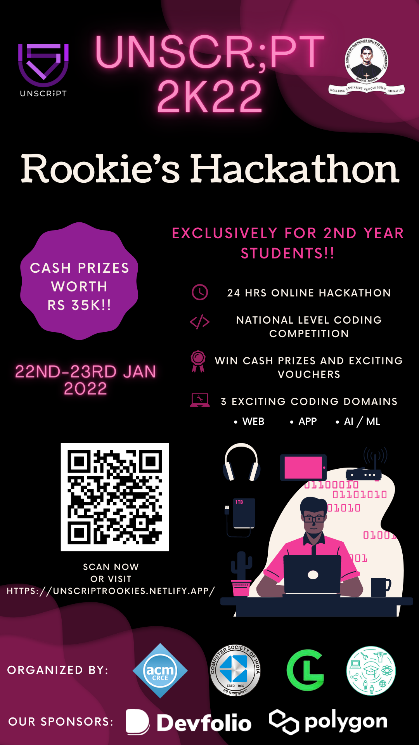
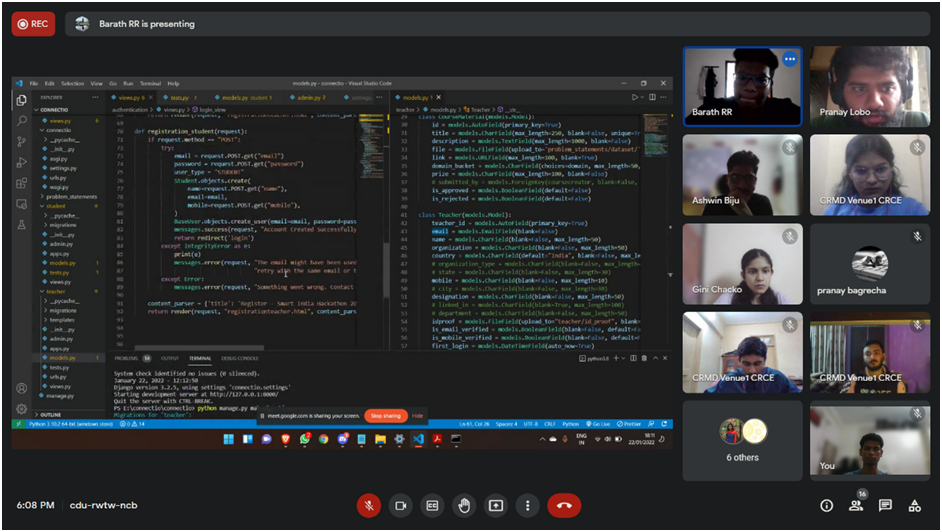
ACM CRCE organized a national-level Hackathon on 22-23 January 2022. The hackathon allowed student developers to explore their technical, soft, and communication skills, investigate their area of interest, and discover and build new skills, The hackathon allowed students to network with industry professionals, faculty, and one another. The event included 1000 attendees; many were from CRCE.
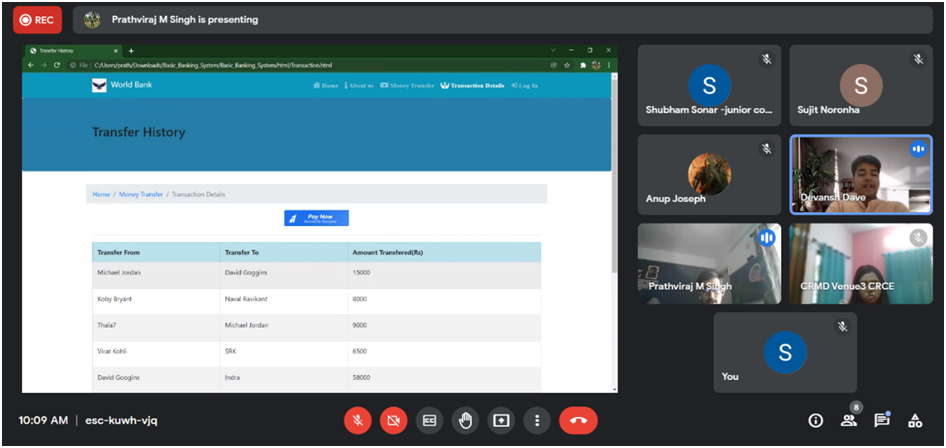
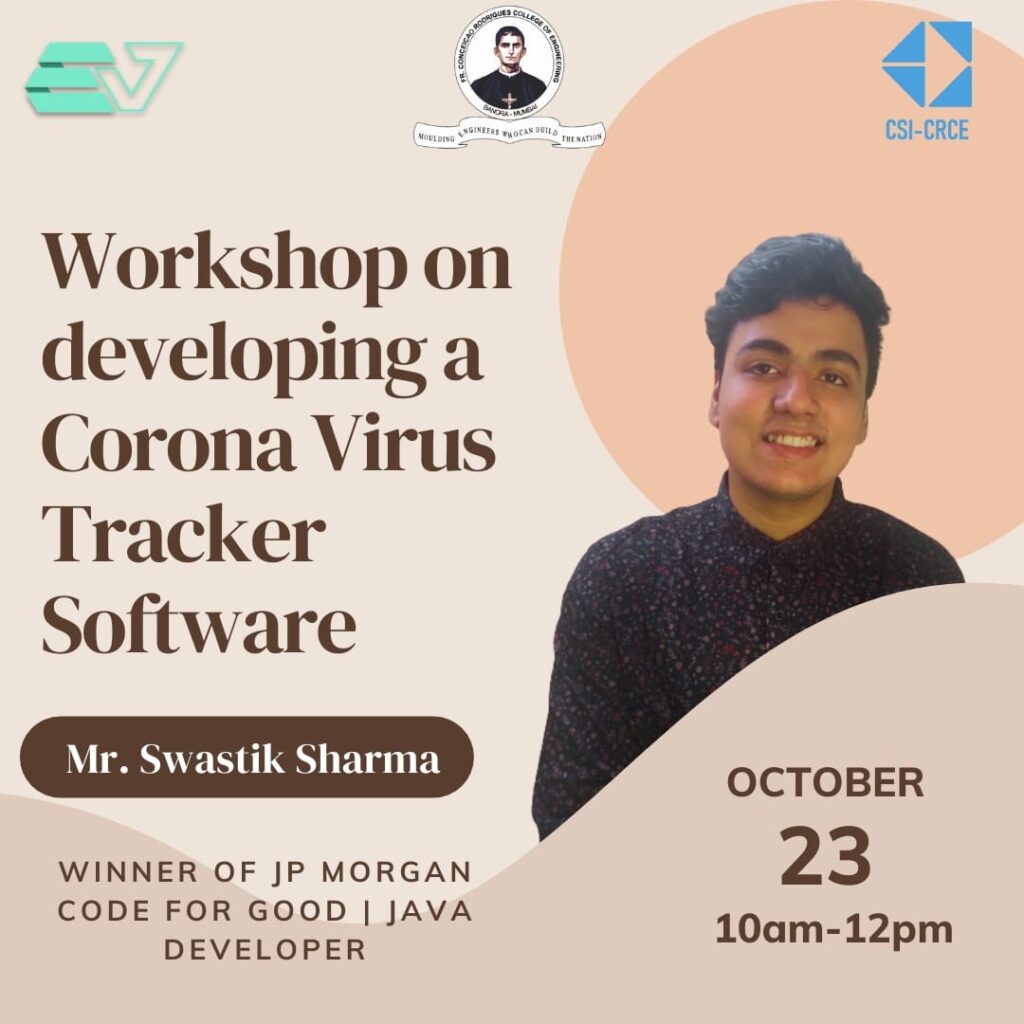
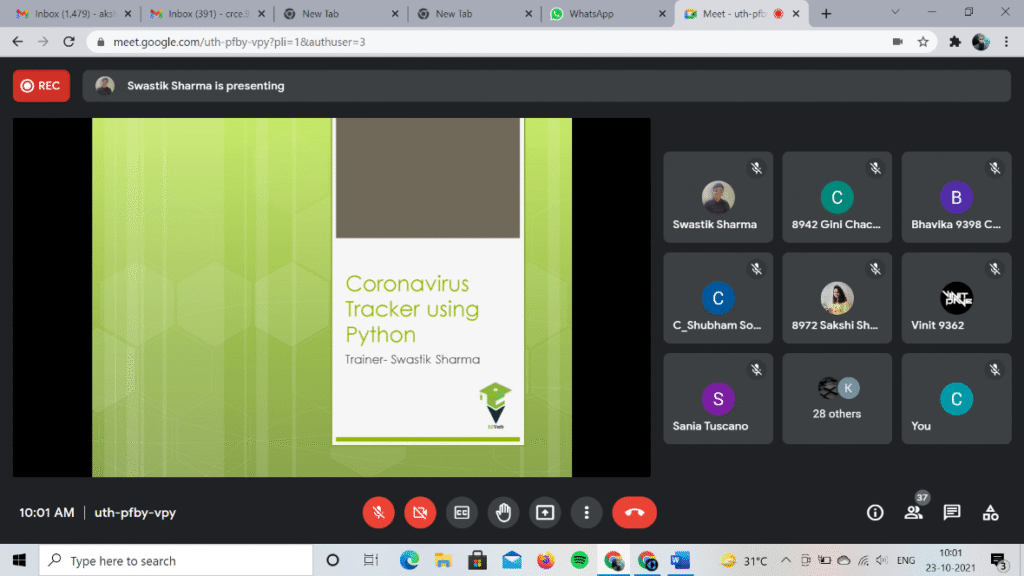
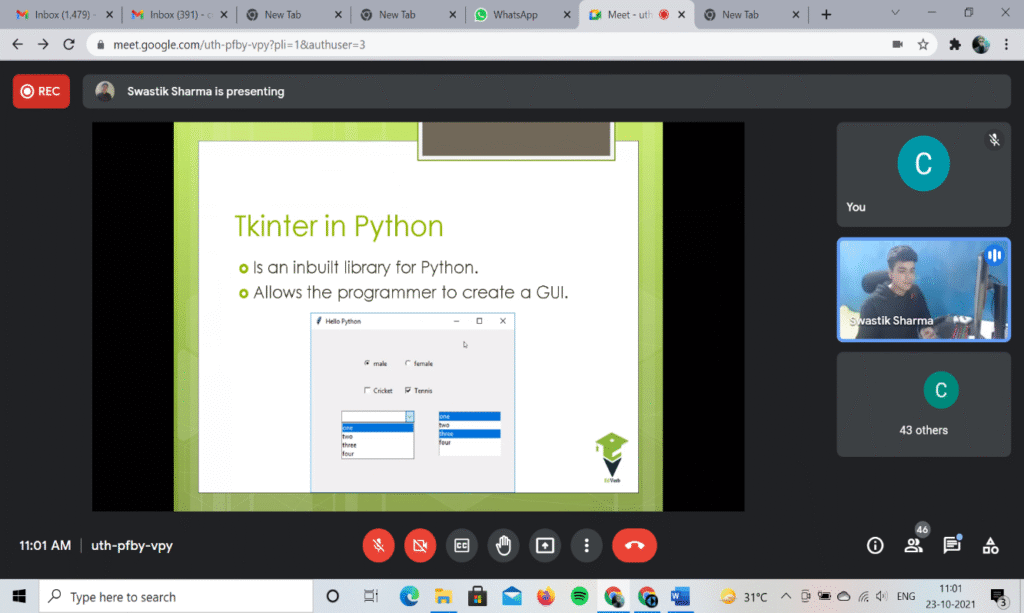
CSI conducted a “Workshop on Developing A Corona Virus Tracker Software” on 23rd October 2021. 78 students participated. The outcome of the workshop was that all the students learned about python programming and understood how real-life problems are handled. The session helped the students learn the basic concepts that are necessary for building up their python programming skills. It enlightened the students to keep working on such problems. The poster for the event is given below:
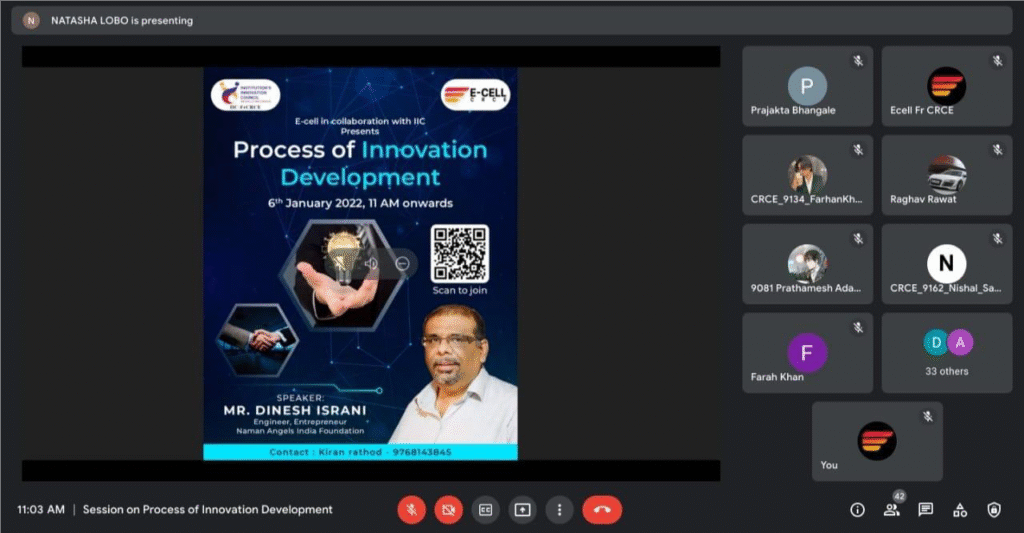
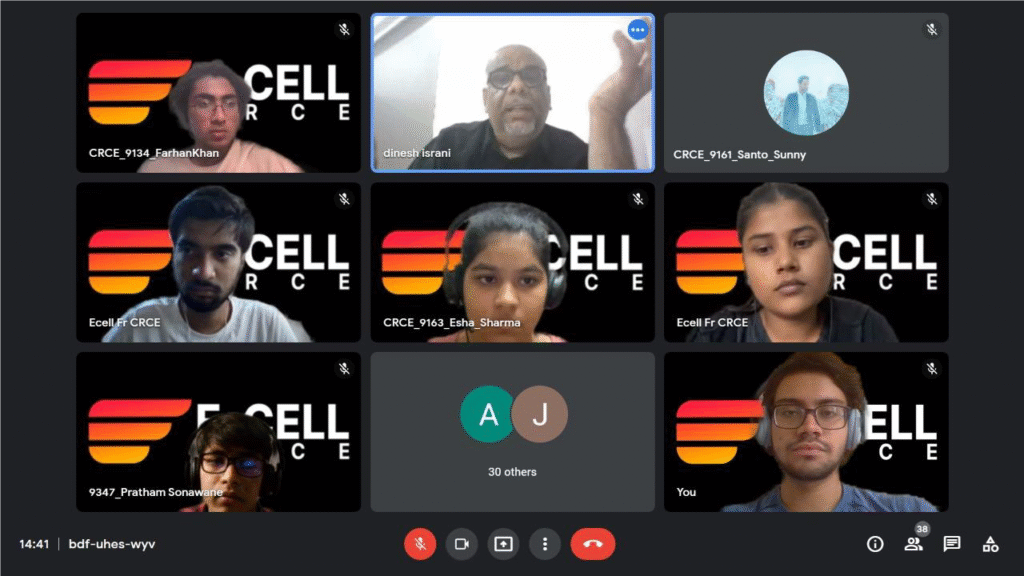
E-Cell CRCE arranged a webinar for the students on the Topic: “Process of Innovation Development” on 6th January 2022, The main points discussed in the event were Introduction to Innovation Development, Idea generation and mobilization, Experimentation and Commercialization.
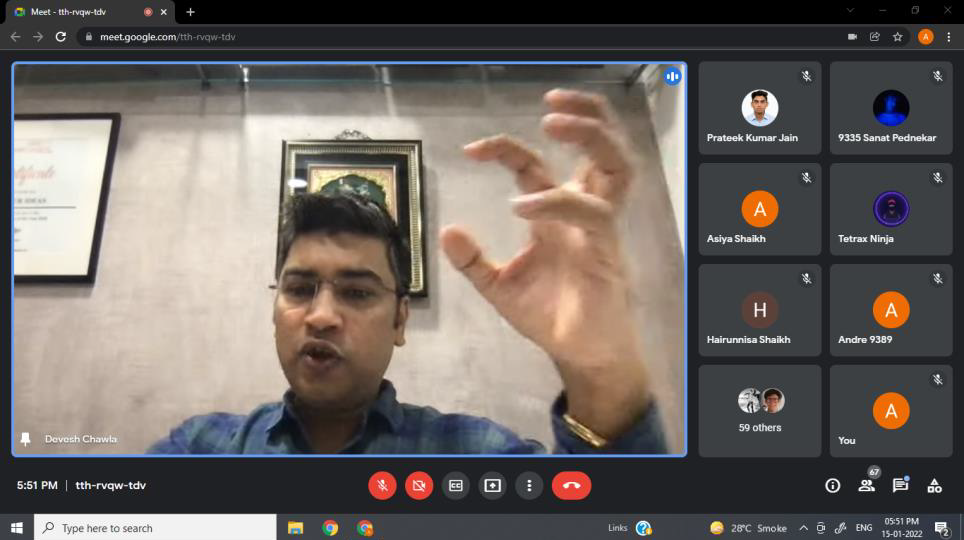
IIIE CRCE conducted a session on Entrepreneurship Development Phases on 15th January 2022. Total 67 students attended the session where many aspects of entrepreneurship and start-ups were discussed with the students.
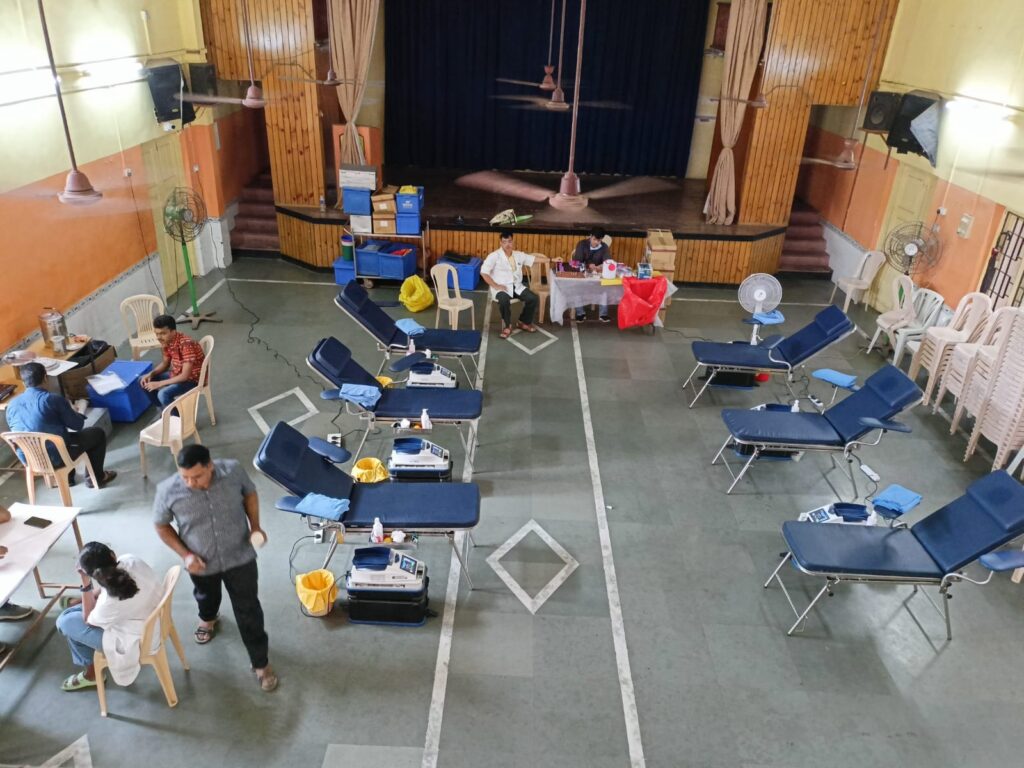
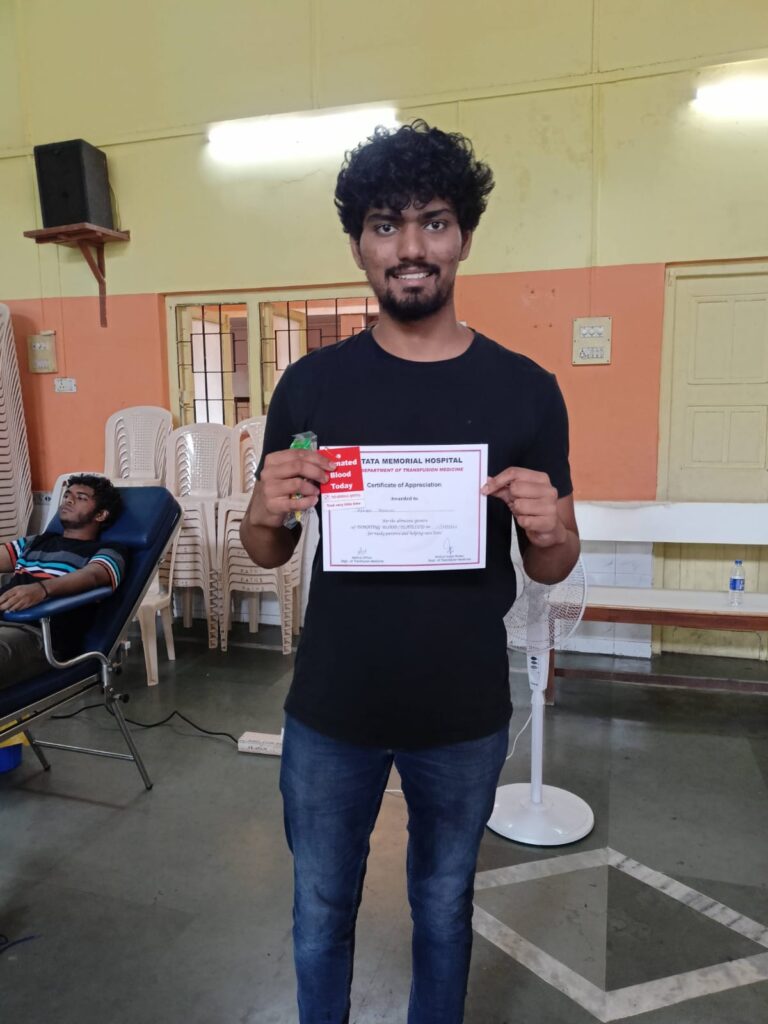
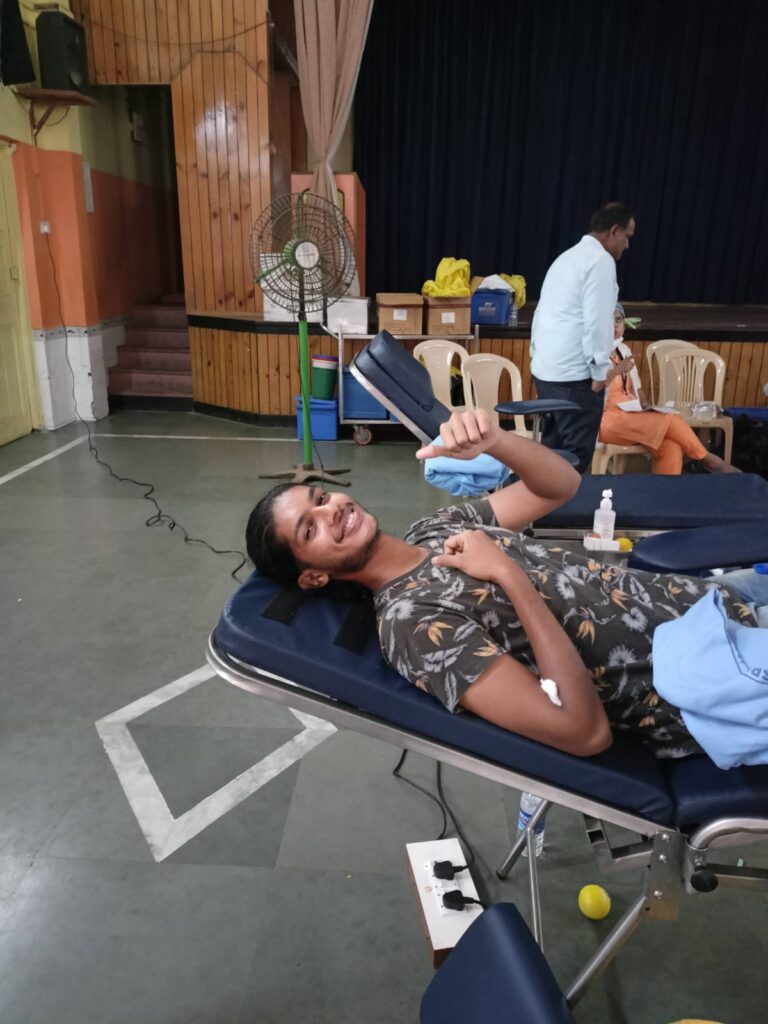
NSS CRCE organizes a Blood Donation Camp every year to stress the importance of blood donation. This year it was successfully scheduled on 17th February 2022. Students were encouraged to donate blood.
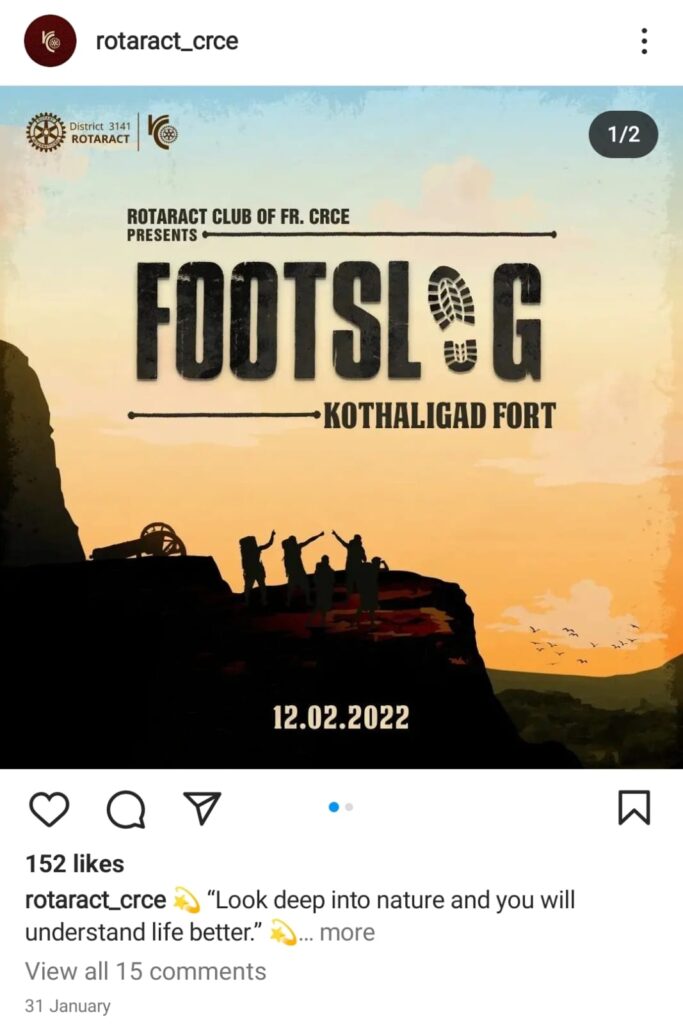
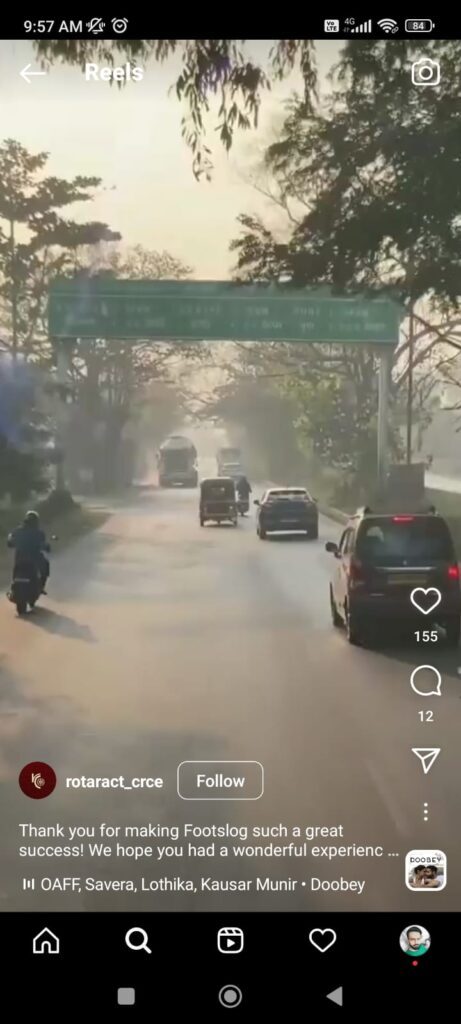
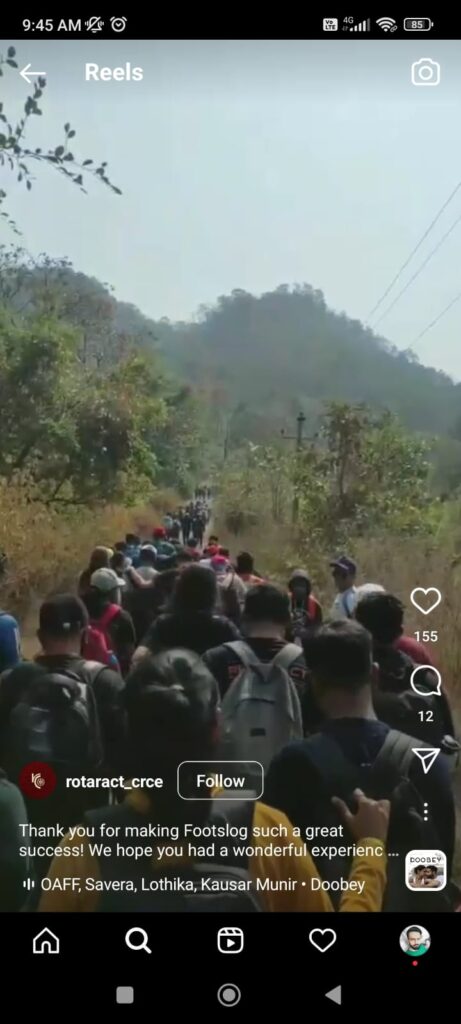
On 12th February 2022, the Rotaract Club of CRCE organized a trek amidst nature called” FootSlog” to Kothiya, Karjat. There were 200 trekkers who participated in Footslog. The trek was 8.2 km long and took around 6 hours to complete the trail.
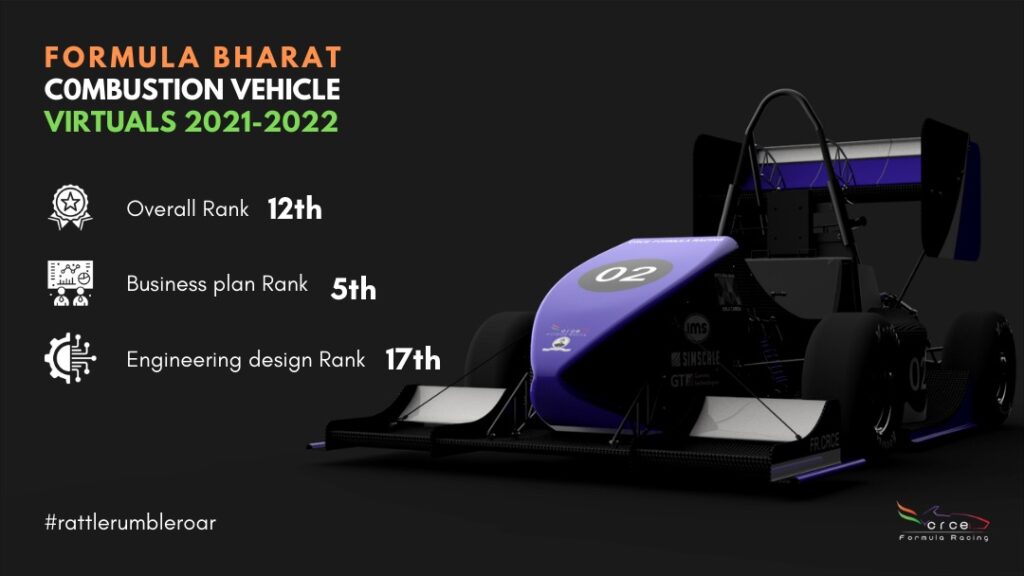
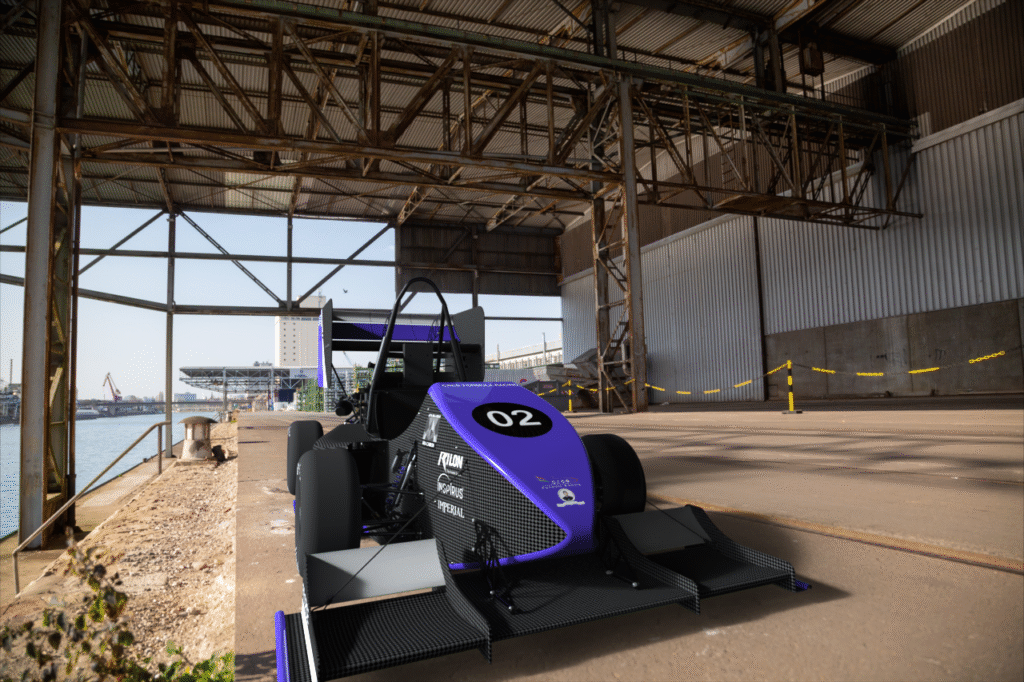
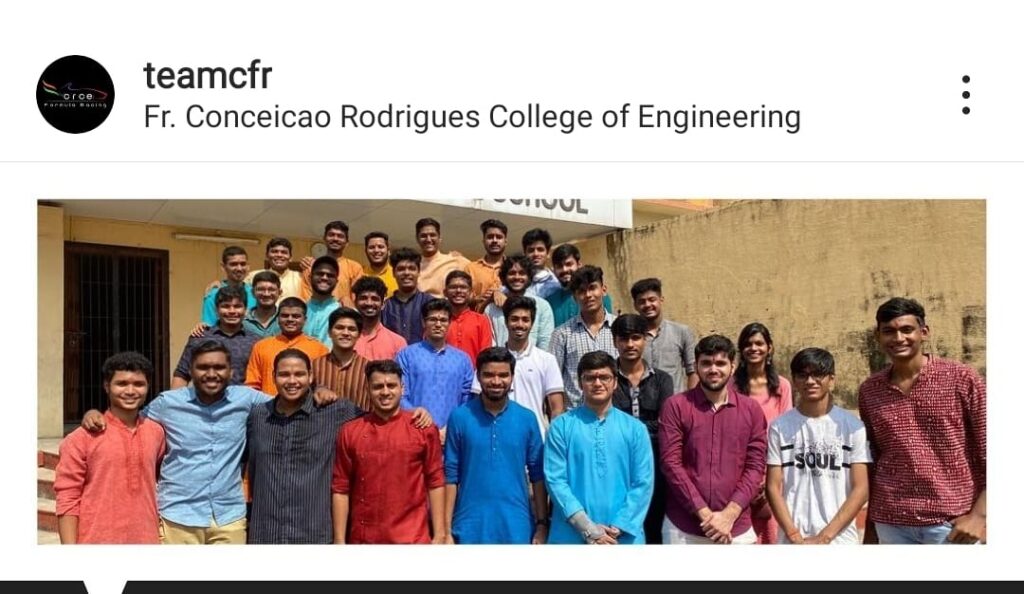
Team CRCE Formula racing participated in the Formula Bharat event and stood 12th overall nationally. Team CFR has 35 students from different disciplines who come together to build a formula racing car from scratch. Each student brings instrumental skills to the team, the union between diverse skill and strong teamwork forms the core of our team. Students work in different department like chassis, components, vehicle dynamics, fabrication, etc essential having a holistic development in terms of theoretical and practical knowledge and team management.
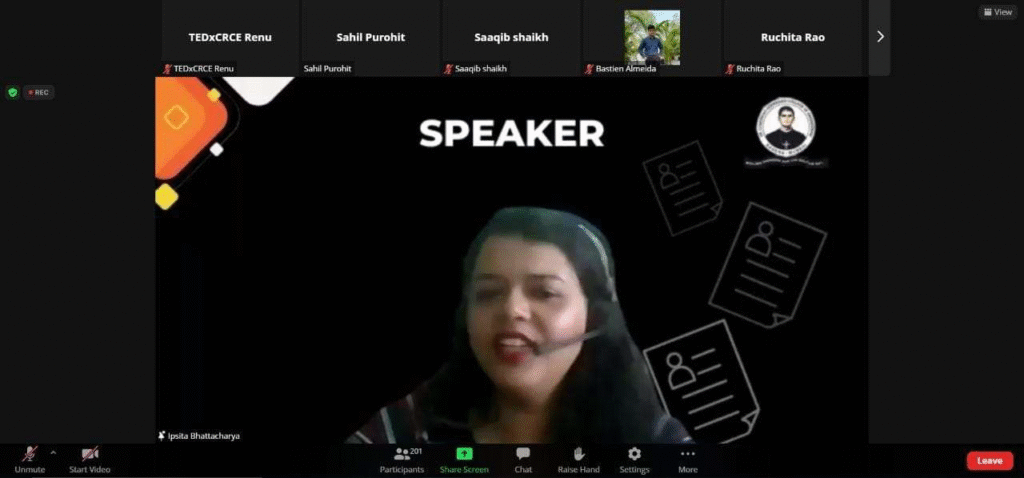
TedxCRCE organized a Resume Building Workshop on 17th January 2022 by Mrs. Ipsita Bhattacharya, an HR Project Manager at JP Morgan Chase and Co. 225 students across all branched participated in the event.