Society of St. Francis Xavier, Pilar’s Fr. Conceicao Rodrigues College of Engineering
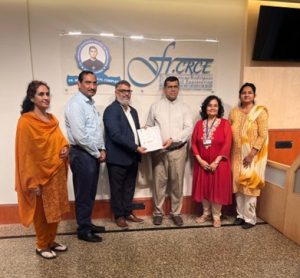
MoU Signed: 7th May 2025
Collaboration Area: Establishment of Applied Blockchain Center and Blockchain Lab Facility
Partner Organization: Intuitive Data Solutions
Under this collaboration, Faculty Development Programs (FDPs), Skill Development Programs (SDPs), professional Hedera Certification, internships, and research guidance were conducted. Five faculty members completed Hedera Certification, and ten faculty members underwent FDP training in Enterprise Blockchain using Hyperledger Fabric. A total of 96 students benefited from this initiative.
Impact:
The MoU significantly strengthened institutional expertise in blockchain technologies. Students gained professional certification and hands-on
experience in Hyperledger and Hedera platforms, enhancing their employability in emerging blockchain domains.
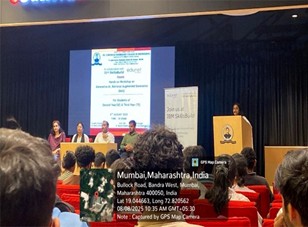
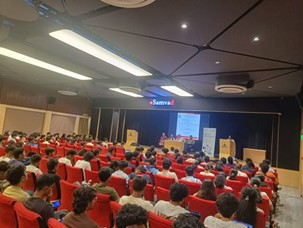
Through this partnership, the IBM SkillBuild Generative AI & RAG Workshop was conducted, benefiting 210 students. Participants received IBM certificates and digital badges upon successful completion.
Impact:
The initiative equipped students with industry-relevant skills in Generative AI and Retrieval-Augmented Generation (RAG), improving their readiness for AI-driven job roles and strengthening industry alignment.
The collaboration facilitates anonymized disease-related medical image collection, ethical approval compliance (IEC/IRB), data governance, and expert clinical annotation
Impact:
This MoU provides students and researchers access to authentic clinical datasets, enabling high-quality research in Medical Technology (MedTech). It ensures ethical compliance while enhancing research output in healthcare AI applications.
The clinic provides patient records and dermatological image datasets for research purposes.
Impact:
Research students gain access to specialized dermatological datasets, enabling the development of AI-based decision-support systems in skin disease diagnosis. This collaboration enhances applied healthcare research and innovation.
The collaboration focuses on Robotics, AI, IoT, Mechatronics, Smart Systems, and Industry 4.0 applications. Joint research projects, faculty-led student initiatives, workshops, webinars, technical seminars, and guest lectures are regularly organized.
Impact:
The MoU has strengthened interdisciplinary research culture between SPCE and CRCE. Undergraduate, postgraduate, and research students actively participate in joint projects, internships, hackathons, and knowledge-sharing initiatives, enhancing innovation and collaborative research output.
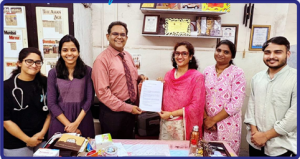
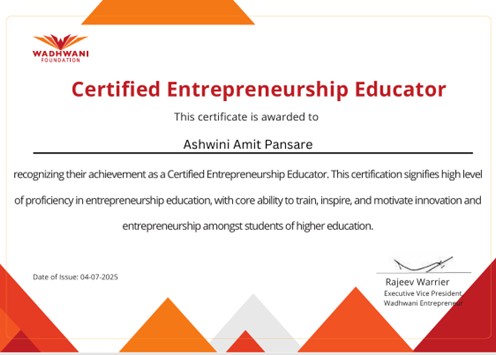
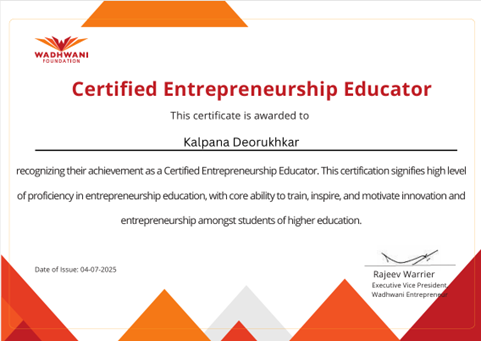
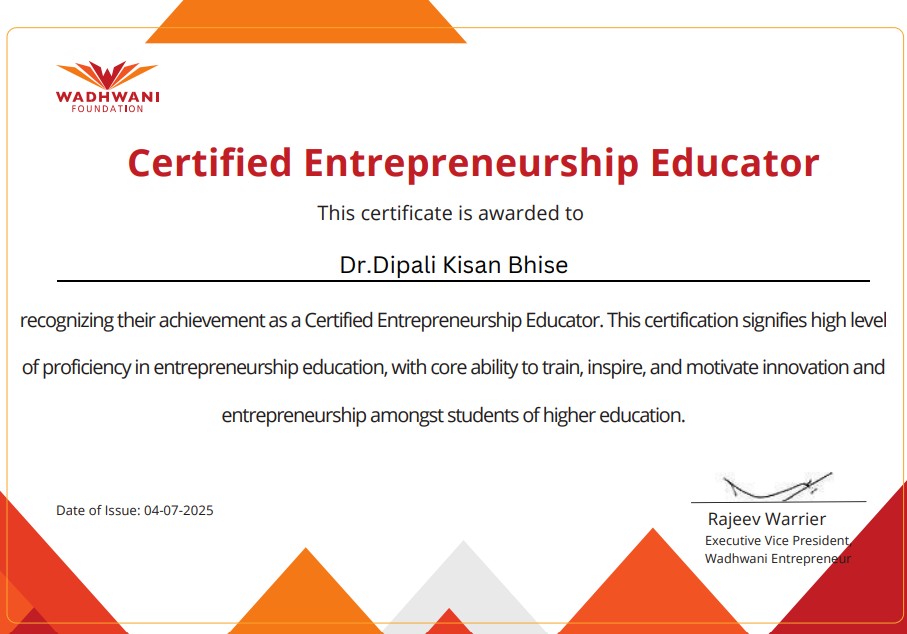
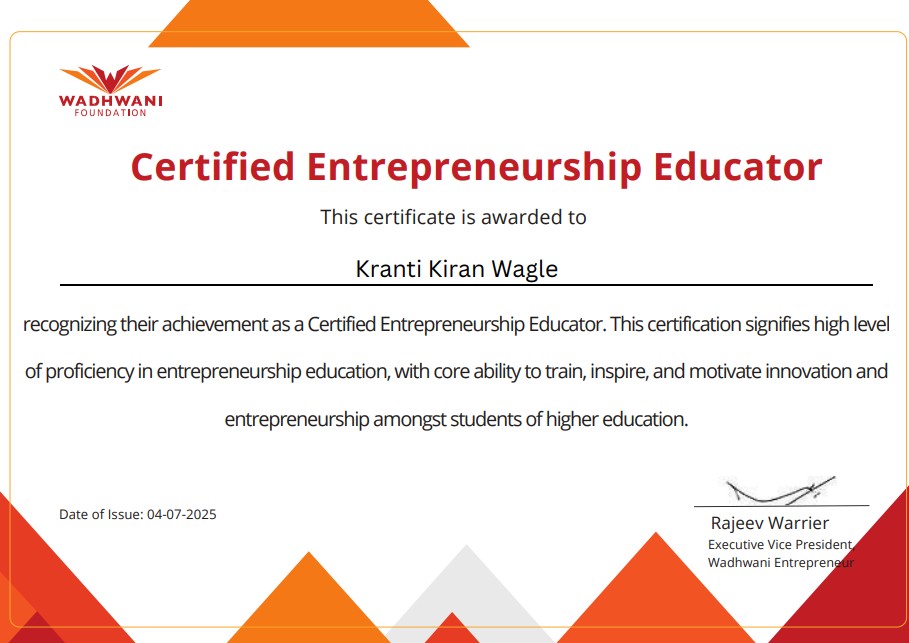
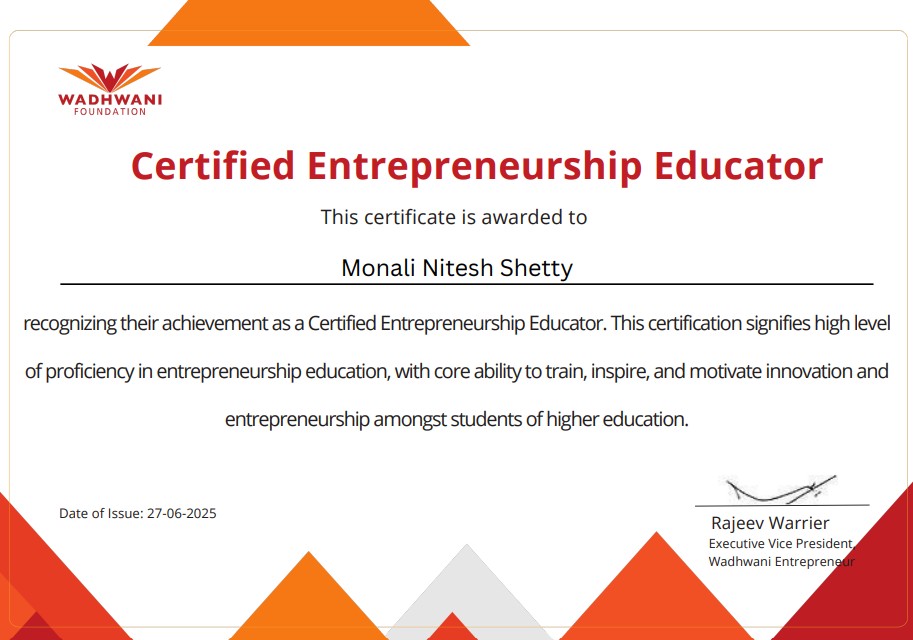
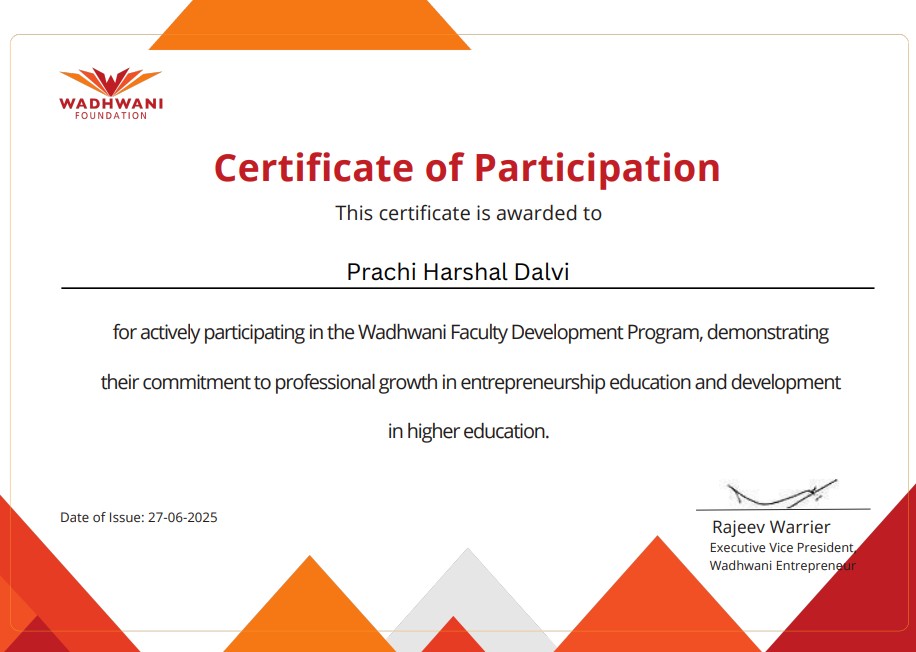
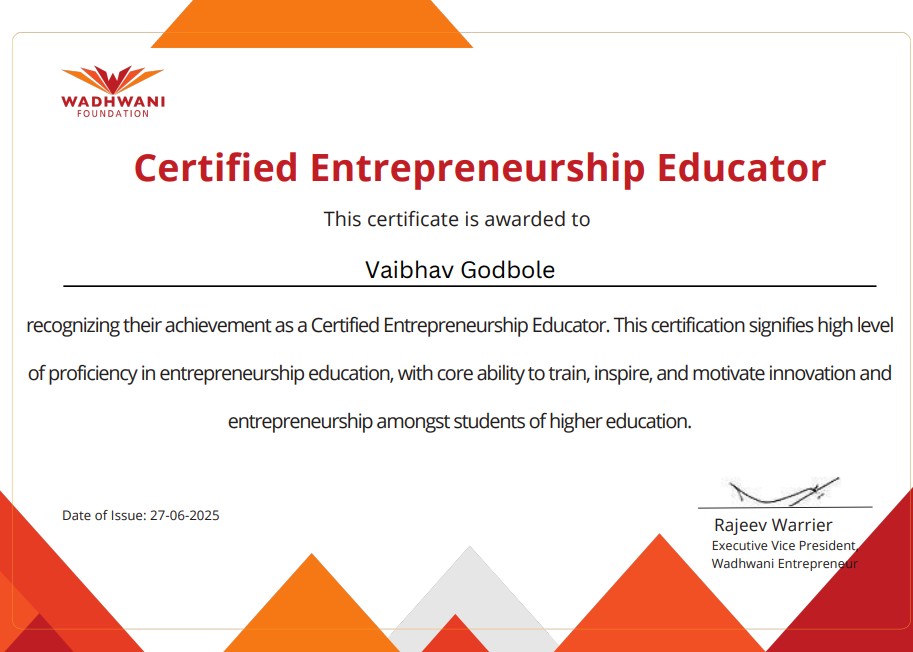
All First-Year students and those opting for the Program Elective “Innovative Product Development” were enrolled on the Wadhwani Portal. A total of 502 students (480 + 22) completed nine structured modules, quizzes, and developed venture proposals based on innovative ideas. Ventures were evaluated, and students received certification. Faculty members also received Entrepreneurship Educator Certification.
Impact:
The collaboration significantly enhanced entrepreneurial mindset development across the department. Students gained structured exposure to startup creation processes, while faculty capacity building ensured sustainability of entrepreneurship education within the curriculum.
Four faculty-led project teams addressed real-world industry problem statements with technical support and training from the organization. A total of 28 students benefited directly.
Impact:
Students developed industry-relevant solutions, improving their practical problem-solving skills, industry exposure, and employability. The collaboration bridges the gap between academic learning and industrial application.